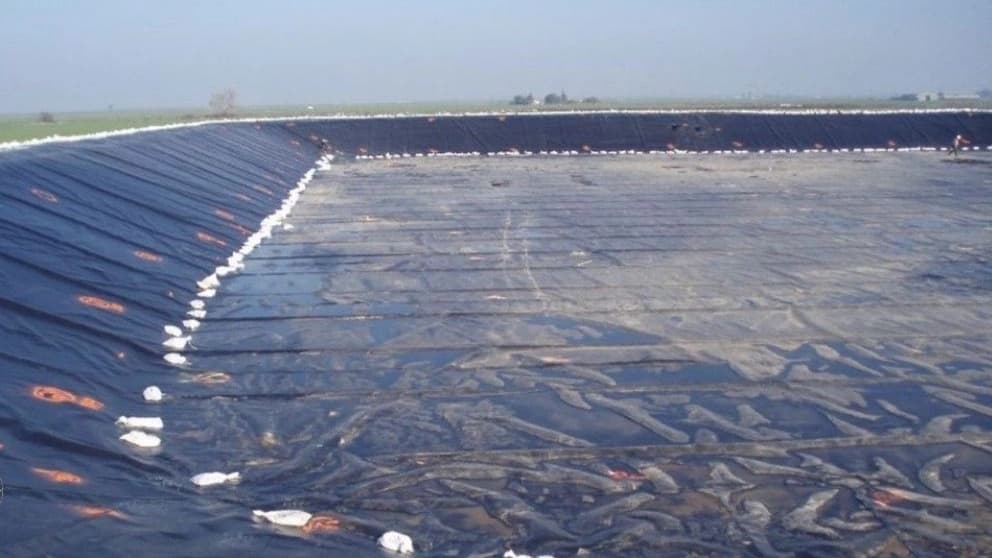
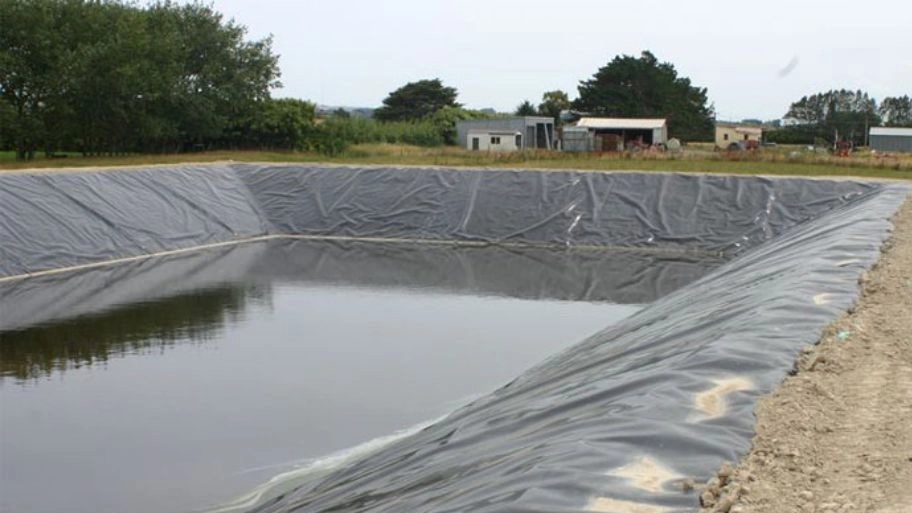
✨ Agricultural water storage pool (geomembrane pool)
Due to the water shortage crisis, the importance of protection for Water resources have increased day by day, and agriculture is not excluded from this category, so in recent years, the importance of protecting water resources as the source of life for living things has become more apparent. The first step to preserve water resources and planning for agricultural, water supply or industrial projects is its storage capacity. One of the methods of water storage is the use of tanks (above ground or underground) and another method is the use of open pools, which are more common especially in agriculture and animal husbandry. Definitely, in order to be able to properly use such water reserves, it is necessary to seal them. Sealing tanks significantly reduces water losses and also reduces side costs caused by leakage and drainage damage. ✨ Fish and Aquatic Breeding Pool
Due to the increasing consumption of protein and overfishing, or the time it takes to move to distant cities, the need for reproduction and cultivation of aquatic animals, especially fish, is felt in most of the country's cities, and for this purpose, it is felt that different types of ponds should be built, such as consecutive, parallel, and paddy ponds. It can be done and soil and concrete are used, but due to the speed of implementation, lack of space, lack of water and having a completely healthy environment for aquatic life, it is recommended to use geomembrane pools. These pools can also be used to grow algae.
✨ Roof garden or green roof
With the increasing tendency of humans to nature and the use of modern technology and urbanization to obtain The feeling of peace, comfort and security, and the need for green spaces and green roofs to pass through polluted spaces and obtain peace, is increasing day by day. To create a completely isolated space without leakage and for the drainage system of the water exit route on the roof, geosynthetic materials can be used, which is one of the uses of geomembrane in the building sector.
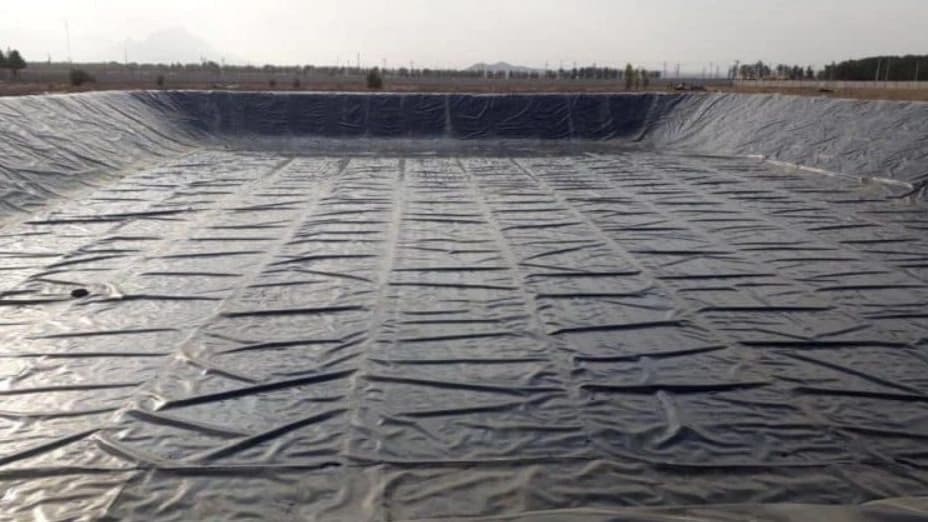
✨ Insulation and Isolation of building pits and structures Due to the use of geomembranes and the location of construction projects and the depth of excavation, we encounter water flow caused by underground water, which in the long term causes the destruction of the building foundation. Therefore, geosynthetic materials, geotextiles, geomembrane sheets, and GCL are used for insulation. After excavating the surface and smoothing the soil surface and the edges of the reinforcement, first the geotextile layer is used to protect the geomembrane layer, or the geocomposite layer is used, which is the best option chosen with the advice of experts.
✨ Insulation of oil and petrochemical tanks
Crude oil after extraction has various salts such as salt and chemical compounds (which after separation is known as drilling mud and effluent) which If it is not separated, it will lead to corrosion of the oil equipment, and for this separation and desalination, it is stored in fuel tanks, and due to these salts and the settling of oil materials over time, generally two types of destruction take place in these tanks:
▪️ Destruction of the foundation of the tank floor: which causes the penetration of petroleum materials into the soil bed and brings environmental effects and fire, etc. periodically repair the tanks, which in the traditional case, the tanks should be emptied and the defective parts should be removed and replaced with a new sheet, which in addition to its heavy cost, also entails the risk of fire. With the emergence of composites and the family of geomembranes, the insulation of these tanks and the risks and costs of maintaining these tanks have been reduced. These sheets are used to insulate the bed of ponds to keep sewage and drilling mud. The use of geomembranes in this industry is increasing.
✨ Water transfer channels
Although some researchers and geologists consider the construction of dams and water transfer to be harmful to the environment. But in some cases, due to drought in some areas and water losses, the water transmission network is used, and in the construction of its infrastructure, it is possible to prevent damage to the lands adjacent to the canal, reduce the costs of operation and maintenance, and minimize time, and more importantly, avoid wasting water. It is investigated in this transfer.
Traditional methods of building a water transfer channel using dense clay or concrete have always faced the issue of water loss and pollution of fresh sources, and on the other hand, when transferring salt water from places with aquifers. Shirin, it is very important to be impervious to the water transfer channel. This is where we will find out that geosynthetic, geomembrane and geotextile materials are the best option compared to concrete, bitumen, etc., which also indicates another use of geomembrane.
✨ Artificial lake and wetlands Artificial lakes are mainly built with the goals of creating recreational places, generating electricity, controlling floods, preventing water loss, increasing green space, developing agriculture and the overall economic growth of that area, which in Iran has also built several examples such as: Chitgar in Tehran, Aras and Gonbadkavus in Golestan, Bostan in Mashhad, etc., which need to be reinforced to make the bed and stabilize loose sand and soil and to reinforce the soil to prevent the bed from settling and eventually cracking and leaking the asphalt coating. It is a big and expensive project. So, to prevent water wastage and to have a completely healthy environment for aquatic life, it is recommended to use geomembranes.